
Ilva, a Danish furniture retailer, raised its return on ad spend by 30% and offline
sales by 20%. That result, shared by Google, came from omnichannel bidding and conversion value rules, not
from shouting louder on one platform.
If your ad budget sits almost entirely in Google Ads and Facebook Ads, this guide is for you. You will learn how to build an omnichannel PPC campaign that follows buyers from first look to final sale. We will also cover which channels deserve a test and how to measure the results honestly. It was written for owners who already run ads and want a clear next step.
Run ads on five platforms and you have a multichannel campaign. Connect those five so each one hands the buyer to the next, and you have an omnichannel one.
Even older industry guides make the same point. Running separate campaigns side by side is not enough, because the channels have to pass buyers along the journey together.
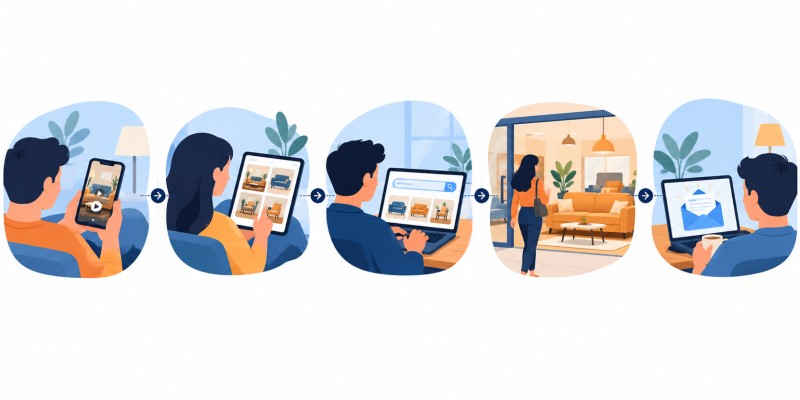
Picture one buyer who watches your video ad on Monday and searches your brand name on Thursday. A search ad earns the click, but she leaves without buying. Saturday brings a retargeting ad that shows the exact product she viewed, and she orders. Three ads, one buyer, and each ad knew its job.
PPC adds a twist because every click costs money. A broken hand-off wastes cash, not just goodwill.
In practice, that means three things. Every channel shares one goal, such as qualified leads or store visits. Each channel gets a single job, like introducing the brand or closing the sale. One shared set of numbers shows what actually worked.
Buyers do not stay on two platforms. They watch a video at lunch, search on their phone at night, and read reviews on a laptop the next morning.
Surveys Google shared in 2022 point the same way. Roughly 59% of shoppers still want to touch products in a store, even when they plan to buy online. Another survey found that half of consumers checked stock before heading out.
Two other problems show up when you stay on two platforms. Costs tend to climb because every competitor bids in the same auctions. And each platform only sees its own slice of the buyer's path.
Adding channels does not mean spreading yourself thin. It means giving every part of your budget one clear job.
Before you pick a single platform, write down how your last ten customers found you. Check your CRM, ask your sales team, and send a one-question survey to recent buyers.
Look for patterns, not one-off stories. Say six of the ten searched your brand name before buying. That tells you branded search needs protecting. If half came through a friend, a referral offer may beat a new ad channel.
Then sketch the path in four stages. Awareness is the first time a buyer hears about you. Consideration is when they compare you with two or three rivals. Decision is the moment they call, book, or pay. Repeat business is everything that follows the sale.
Each stage needs a different kind of ad. Cold audiences ignore a buy-now button. Warm ones do not need your whole brand story.
You do not need all of these. Pick the two that fit your buyer's path and test them for a full buying cycle.
Microsoft Advertising. It runs search ads on Bing and partner sites, and you can import many Google Ads campaigns in a few clicks. Competition is often lighter than on Google, though your own cost data should decide.
YouTube and connected TV. Video builds awareness before people ever search. Show a short ad about the problem you solve, then retarget viewers with a search ad later.
LinkedIn Ads. If you sell to other businesses, you can target by job title and company size. Clicks cost more here, so save it for offers worth a real sales call.
Pinterest, Reddit, and TikTok. Pinterest suits buyers who plan purchases in advance, like home or wedding items. Reddit reaches people asking for honest recommendations in niche communities. TikTok works for products that look good in a ten second demo.
Amazon Ads and retail media. If you sell products, shoppers on marketplaces are already close to buying. Ads there catch them at the decision stage.
Match each channel to a stage from your path map. Search channels mostly catch decision-stage buyers, video and social build awareness, and email plus remarketing bring people back.
Give every new channel a fixed test budget, a clear goal, and a stop date. Decide in advance what result counts as a win, such as a cost per lead you can afford. If your team is already stretched, a good PPC agency can set up and run these tests while you stay focused on the business.
Treat your omnichannel digital advertising strategy 2026 as one budget with different jobs, not five separate ones.
A common starting point is 70% on channels that already work, 20% on your next best test, and 10% on pure experiments. Adjust after 60 to 90 days, once you have real cost per lead numbers.
If your monthly budget is small, add one channel at a time. Splitting a small budget across five platforms leaves each one too thin to learn from.
Bidding strategy matters just as much as budget. Ilva paired omnichannel bidding with conversion value rules, which adjust how much a conversion is worth to the bidding system. You can borrow the idea by giving store visits or phone leads a higher value than a plain form fill.
A buyer who sees your offer in three places should recognize it in all three. Use one core promise, one main offer, and one visual style.
The format itself should change from place to place. Search ads are a few lines of text. Video needs a hook in the first few seconds. LinkedIn posts can run longer and sound more like a colleague than a brand.
Hand-offs between channels are where most campaigns quietly break. Someone who watches half your video ad should later see a search ad that continues the same story.
Each platform grades its own homework. Every one of them takes credit for sales it only touched, so the totals add up to more than you really earned.
Start with the numbers you control. Compare total ad spend to total revenue and to new customers across all channels.
Tag every ad link with UTM codes, which are small labels showing where each click came from. Leads should flow into your CRM so you can see which source produced paying customers.
If you have a shop or take orders by phone, bring those results back into your ad accounts. Google offers bidding built for store visits and store sales, which only works when that data flows in.
You can also pause one channel in a single city for a few weeks. If total sales barely move, that channel was not pulling its weight.
Ask every new customer how they heard about you. A simple form field often reveals channels the tracking missed, like a podcast ad or a friend. Teams without the time for this kind of cross-channel tracking often hand it to a performance marketing agency that reports on revenue, not just clicks.
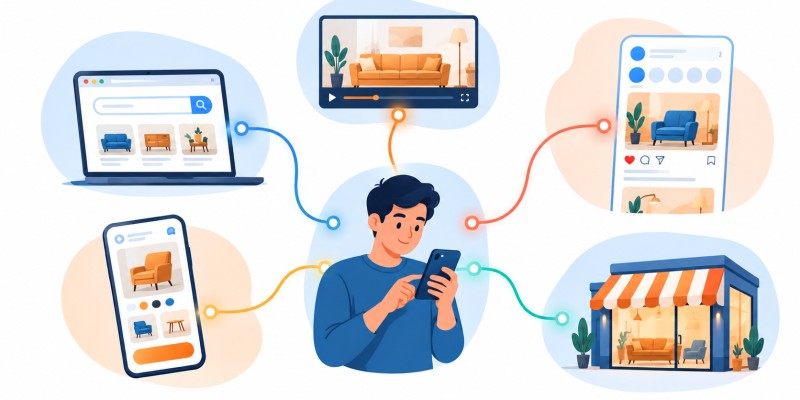
Here is a made-up example to show how the pieces fit. A furniture store with two
showrooms and an online shop puts nearly all its budget into Google Search and Facebook. Now it rebuilds the
plan around the buyer's path.
At the awareness stage, a short YouTube video shows a sofa in a real living room to people near the showrooms. Promoted pins on Pinterest reach people who are saving room ideas. Search ads on Google and Microsoft then catch the ones typing "sofa shop near me." Local inventory ads show shoppers what is on the floor today, and bidding favors store visits.
After a purchase, email asks for a review and shares care tips, and a retargeting ad offers matching side tables a few weeks later.
Every ad link carries UTM codes, store sales flow back into Google Ads, and the owner reviews total spend against total revenue each month.
Nothing in this plan is exotic. Each channel simply has a job and a hand-off.
Building an omnichannel PPC campaign is less about adding platforms and more about connecting them. Map your buyer's path, give each channel one job, keep the message steady, and measure total results, not platform reports.
This month, pick one channel from the list above and test it for 60 days on a fixed budget. Write down your expected result first, so you can judge the real one honestly.
Bud India | Creative Advertising Agency, Bangalore
WE ARE AN OFFICIAL GOOGLE PREMIER PARTNER
