
The event business is dynamic. What filled audiences in 2024 will be outdated, and what worked in 2025 is the norm. So, what’s next?
The following is a mere glimpse into 2026 event marketing trends that will define the future of event-based marketing and any robust brand visibility strategy.
As a brand leader, marketer, or event planner, you would want to be ahead of the game. This guide will enable you to see what is in the pipeline, the reasons why it counts, and how you can get ready.
Now, we are going to discuss the massive disruptions, new concepts, and evolving viewer demands that will mark the next stage in event marketing.
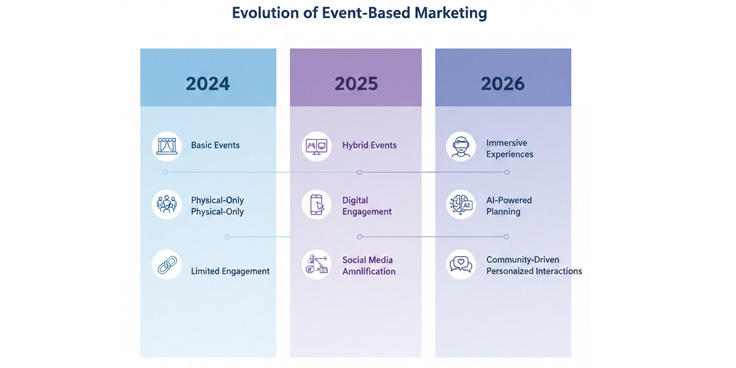
By 2026, events will be an effective component of the event-based marketing and any brand visibility strategy. Social media is full of content, and algorithms determine what individuals see. However, live events penetrated this noise. They both generate actual attention, actual interaction, and actual impact.
Events will be used by brands to clarify change, involve individuals, and make the company's culture stronger. There are no more one-time campaigns. They have become tactical brand interfaces that have objective targets and quantifiable outcomes.
The attention is to be minimal in 2026, and brands have to develop distinctive and valuable experiences. In event-based marketing, people do not remember events simply because they took place. They recollect those things that either caused them to experience something.
The brand visibility strategy will aim to create a once-in-a-lifetime experience that customers will remember even after the event has taken place. Such instances develop feelings, enhance brand image, and spark discussions that circulate between communities and networks.
In 2026, artificial intelligence will be significant in event-based marketing. The brands will be able to test ideas, plan experiences, and enhance results long before the event takes place with the help of AI.
Digital audience simulations and similar tools help marketers determine what works best, what people want, and what work is required. This assists brands in making wiser decisions at an early stage and coming up with more powerful and effective events aimed at reinforcing their brand visibility strategy.

Contemporary events are not merely experiences, but they are part of a communal culture. Event-based marketing in the year 2026 will center on the establishment of long-term relationships among the brand, employees, customers, and stakeholders.
Activities will be developed as continuous engagement platforms, repeat format, leadership programs, and community-based experiences. This strategy enhances connections and aids brands in creating communities of loyalists that would contribute to the brand's visibility strategy in the long run.
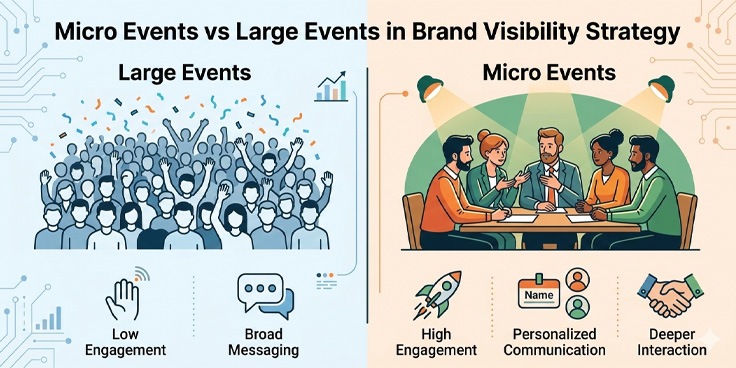
The popularity of smaller, targeted events will rise in 2026. These micro events are individual, focused, and very interactive. Rather than targeting the whole market, the brands will engage in purposeful communication with the correct audience.
Companies will use various mini events in different locations and for different audiences as part of a smart event-based marketing plan. These occurrences are best suited for product launch, leadership, and customer interactions. They assist in the development of better relationships and the enhancement of the general brand visibility strategy by means of quality contact.
Employee-related events will be an important component of event-based marketing and internal brand visibility strategy in 2026. Formats such as kick-offs, culture days, and leadership meetings provide what is impossible to achieve through emails and presentations: clarity, energy, and connection.
In cases where leaders are visible and employees are involved, trust and alignment will be created. Such events enable the teams to understand the company's goals and that they are part of the brand and its journey. This is why the internal events have become a strategic means of engagement, communication, and long-term culture building.
By 2026, anniversaries will not be festivals, but potent instruments of event-based marketing. They will provide a platform via which a brand will be able to look back on its path and present a vision of what is to come.
An effectively planned anniversary event enhances identity, develops trust, and links employees, customers, and other stakeholders. These events, as an element of a robust brand visibility strategy, produce significant experiences that transcend a single evening and produce a permanent brand impression. H3 - 8. Mindful Events Planning to Improve Interaction.
The contemporary audience is hectic and crowded. Successful event-based marketing in 2026 will be based on mindful event design - designing spaces where human beings are able to think, connect, and get inspired.
Rather than being overinformative, events will be centered around clarity, intentional discussions, and moderate experiences. This will enhance the interactivity, and people will be able to remember the brand message longer. Careful event planning enhances the level of emotional engagement and helps achieve a better brand visibility strategy.
The 2026 trend of the brand will be a think global, act local mode of event-based marketing. The ideas from global events will be localized to suit local cultures, languages, and audience expectations.
This assists brands to have a stable international identity and yet remain pertinent in the respective markets. This is one of the strategies as a strong brand visibility strategy because every event will be personal, relatable, and meaningful, no matter the location where it is taking place.

The expectations of the audience are evolving at a rapid pace. Nowadays, people do not merely desire information but experiences, interpersonal communication, and actual value. That is why event-based marketing is playing a significant role in any contemporarybrand visibility strategy.
The events have never been as personalised and engaging as they are now with the emergence of new technologies like AI, data analytics, and immersive tools, such as VR and AR. Meanwhile, such social values as sustainability, responsibility, and authenticity are informing the connection between brands and their audiences.
Incidents cease to be a single occurrence. Through an appropriate content strategy, one event can generate ongoing interaction, empowered communities, and recollection of the brand.
Never mind, trends just work when you act on them. Having a good Advertising Agency to collaborate with would enable you to transform these ideas into meaningful experiences. Whether it is innovative ideas, interactive activations, or local activations, the ideal team can ensure your brand is not a follower.
You need to make your next event memorable, viral, and returnable to your audience. Today is the day to start planning and transform your events into effective growth engines and brand connectors.
WE ARE AN OFFICIAL GOOGLE PREMIER PARTNER
