
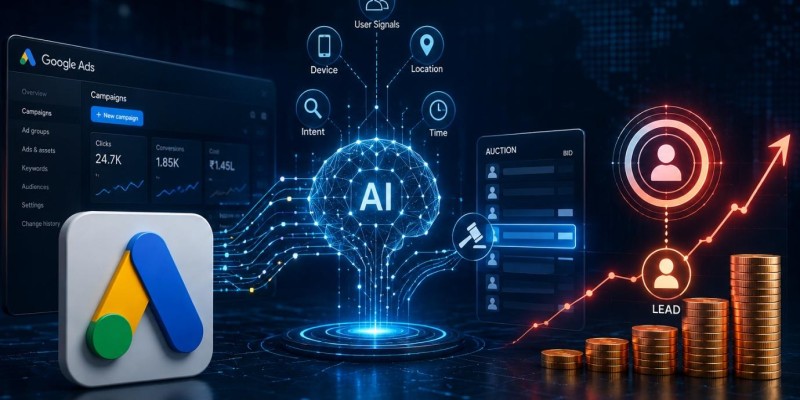
Google's AI bidding update, rolled out on 17 August 2026, has changed how advertisers compete in Google Ads auctions. Since the update, many businesses have reported paying more for the same leads, even when their budgets, campaigns, and targeting have remained unchanged. It is the result of how Google's bidding models now evaluate conversion signals, user intent, campaign quality, and competition in real time.
If your campaigns are generating fewer leads or costing more than they did a few months ago, this is the right time to review your strategy. Let's take a closer look at what changed with AI bidding Google Ads 2026.
What Changed in Google Ads AI Bidding
Target-based bidding now follows your set goals more closely
Google has updated how Target CPA and Target ROAS campaigns behave when they are limited by budget. Instead of outperforming the targets you've set, campaigns now optimise more consistently towards those targets, even when budgets change.
Campaign performance may change if targets aren't reviewed
Businesses with campaigns that were consistently beating their Target CPA or Target ROAS may notice higher costs per conversion unless they update their bidding targets to reflect current performance.
Budget changes are now more predictable
The update reduces unexpected fluctuations when campaign budgets are increased or decreased, making performance more consistent with the bidding targets advertisers have set.
What Can You Expect from This Update?
Following the rollout, businesses may notice short-term changes in campaign performance as Google's AI adjusts to updated bidding targets and conversion signals. This is a good time to review your Target CPA or Target ROAS, verify that conversion tracking is working accurately, and monitor campaigns more closely. Instead of increasing budgets immediately, focus on improving campaign quality and optimisation to help maintain consistent performance.
Why has your cost per lead spiked?
The rise in Google Ads cost per lead isn't caused by the AI bidding update alone. As more businesses adopt automated bidding, competition in Google Ads auctions has increased, driving up advertising costs. Google's AI also reacts to market changes much faster than manual optimisation, making accurate conversion data essential for effective bidding. Without strong campaign optimisation, businesses that simply increase their budgets may end up paying more for the same results. In such situations, businesses may also benefit from working with a Google ads agency or consulting a PPC Agency in Bangalore to review campaign performance and optimise their bidding strategy.
There isn't a single bidding strategy that works for every business. The right choice depends on your campaign objectives, available conversion data, and the outcomes you want to achieve. Reviewing your goals before selecting a bidding strategy can help improve campaign performance and support effective PPC management for your business.
Target CPA
Choose Target CPA if your goal is to generate leads at a consistent cost. This strategy works best for businesses with stable conversion data and a clear target cost per acquisition.
Target ROAS
If your focus is on revenue rather than lead volume, Target ROAS is a better choice. It helps Google optimise bids based on the expected return from each conversion.
Maximise Conversions
This strategy is suitable for campaigns aiming to generate the highest possible number of conversions within a fixed budget. It can also be useful for businesses that are building conversion history.
Maximise Conversion Value
For businesses where conversions have different values, this strategy prioritises actions that contribute the most to overall business performance rather than simply increasing conversion numbers.
Should You Change Your Bidding Strategy Immediately?
Not necessarily. If your campaigns are delivering consistent results, avoid making multiple changes at once. Review campaign performance, analyse recent data, and check whether your current bidding strategy still aligns with your business goals before making adjustments. Small, well-informed adjustments are often more effective than reacting to short-term fluctuations.
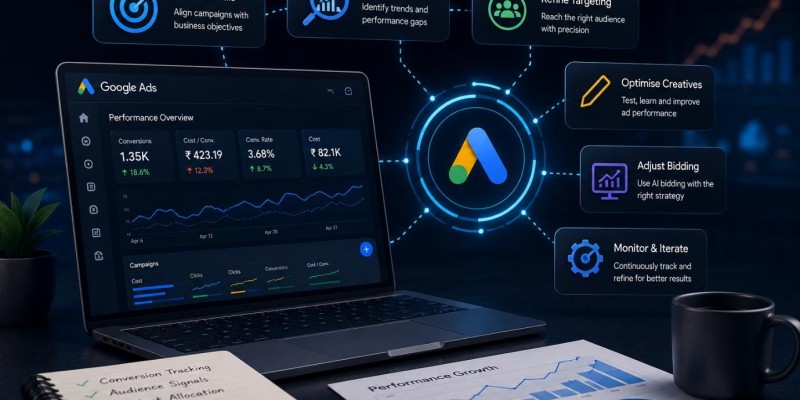
Adapting to Google's latest AI bidding update requires more than enabling automation. Effective PPC management for business starts with accurate conversion tracking, regular reviews of AI bidding performance, and continuous testing of ad creatives and messaging. Before increasing budgets, improve your landing pages to maximise conversions. Most importantly, let campaign data guide every optimisation decision to reduce Google Ads cost and improve long-term performance.
How to Measure Success After the Update
Once your campaigns have adapted to Google's latest AI bidding changes, it's important to evaluate performance using the right metrics instead of focusing on cost alone. While changes in Google Ads cost per lead may attract immediate attention, businesses should also monitor lead quality, conversion rate, return on ad spend, and overall campaign efficiency. Tracking these metrics over time provides a clearer picture of how the updated bidding system is performing and helps identify opportunities for further optimisation.
Google's AI bidding update has changed how campaigns are optimised, making it important for businesses to review their bidding strategies instead of relying on automation alone. Accurate conversion tracking, regular campaign reviews, and data-driven optimisation are essential for maintaining performance while helping reduce Google Ads cost.
The biggest takeaway is that this update doesn't require businesses to rebuild their campaigns from scratch. Instead, it calls for smarter decisions based on campaign performance, reliable conversion data, and continuous optimisation. As competition continues to grow, reviewing your bidding strategy regularly and making informed adjustments will deliver better long-term results than reacting with higher budgets or frequent campaign changes.
At Bud India, we help businesses adapt to platform updates through strategic campaign planning, creative optimisation, and data-driven performance marketing. Our approach focuses on building campaigns that align with business goals, respond to changing market conditions, and deliver measurable, long-term growth.
Bud India | Creative Advertising Agency, Bangalore
WE ARE AN OFFICIAL GOOGLE PREMIER PARTNER
